
Officials: True mental health impact of Melissa expected to surface within weeks
Published:Thursday | November 27, 2025 | 12:11 AMLivern Barrett/Senior Staff Reporter
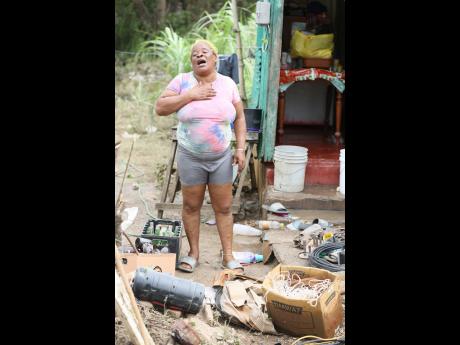
Jamaica is likely to see an increase in “adverse mental health outcomes” in the aftermath of the death and destruction caused by Hurricane Melissa, a consultant psychiatrist has warned.
Post-traumatic stress disorder, major depression and anxiety disorder are among the trauma-related mental health issues that are likely to surge, said Dr Kristen Robinson Barrett, director of treatment services at the National Council on Drug Abuse (NCDA).
“Given the great difficulty and distress that we know will come after a natural disaster, and a natural disaster being characterised as a traumatic event, we know that we are likely to see an increase in adverse mental health outcomes,” Robinson Barrett told The Gleaner during a recent interview.
The warning comes amid a surge in calls to the national Mental Health and Suicide Prevention Hotline in the last two months.
The hotline fielded 768 calls in October, 135 more than the previous month, according to the latest NCDA figures.
Before October, the highest number of calls to the hotline over a one-month period was 325 in June. The 160 recorded in April is the lowest for a single month this year, the NCDA data shows.
A breakdown of the figures for October shows that 73 calls were complaints about suicidal ideation, 65 were complaints about depression, 45 were related to emotional distress, and 23 related to anxiety.
In 11 cases, the telephone lines were open but the caller said nothing.
Health Minister Dr Christopher Tufton said, “Yes, absolutely”, when asked whether he shared the view that Jamaica could see a spike in adverse mental health outcomes in the wake of the death and destruction caused by Hurricane Melissa.
“We have seen indications of that. I’ve certainly witnessed indications of that at ground zero, where the event unfolded, and to those who experienced it,” he said during a recent interview.
Tufton said many people are at a loss as to the extent of the damage to their homes, personal possessions, their livelihood, investments, or how to rebuild their lives.
At least 45 people were killed by the Category 5 hurricane, which made landfall in Jamaica on October 28.
BROAD-BASED INITIATIVES
The health minister said the Government will have to lead a range of broad-based initiatives “to deal with this kind of psychosocial vulnerability”.
Robinson Barrett, who is a consultant psychiatrist, cautioned that the anticipated spike in mental disorders could begin within a month after the hurricane.
“A lot of the people who are the most adversely affected (by the hurricane) don’t have connections to call the [hot]line at the moment, as they are focusing on their basic needs first,” she reasoned.
“When you are in survival mode, you are going to be focused on getting your primary needs met. But it’s going to be in the following month, when there is some sense of stability again, that the mental health issues start to become the primary focus,” she added.
Robinson Barrett said feelings of anger, sadness or nervousness are normal immediately after a traumatic event, but could be indicators of mental disorders if they are prolonged.
Some of the signs, she said, include feeling nervous in a consistent way, feeling sad most days, feeling any sense of hopelessness, changes in your appetite, losing interest in your usual activities, increased substance use, and not being able to maintain normal relationships.
“Things like these are concerns….those would be signs that something is going on in terms of mental health that you would want to have assessed,” she suggested.
The health minister disclosed that the Government has been working with the Pan-American Health Organization (PAHO) to address the issue.
He said an American mental expert provided by PAHO is in Jamaica and is work with local experts to provide assistance.
“We have formulated and started an orientation programme around community outreach,” Tufton said, noting that there is a mental health team in each parish.
He said the idea is to establish a control centre in each parish – typically at the hospital – and then map the communities that are impacted and provide basic responses.